Light pollution: observing from town and finding darker skies
Artificial light hides most of the stars for most people. You can still observe a great deal from town, and a darker site is often closer than you think.
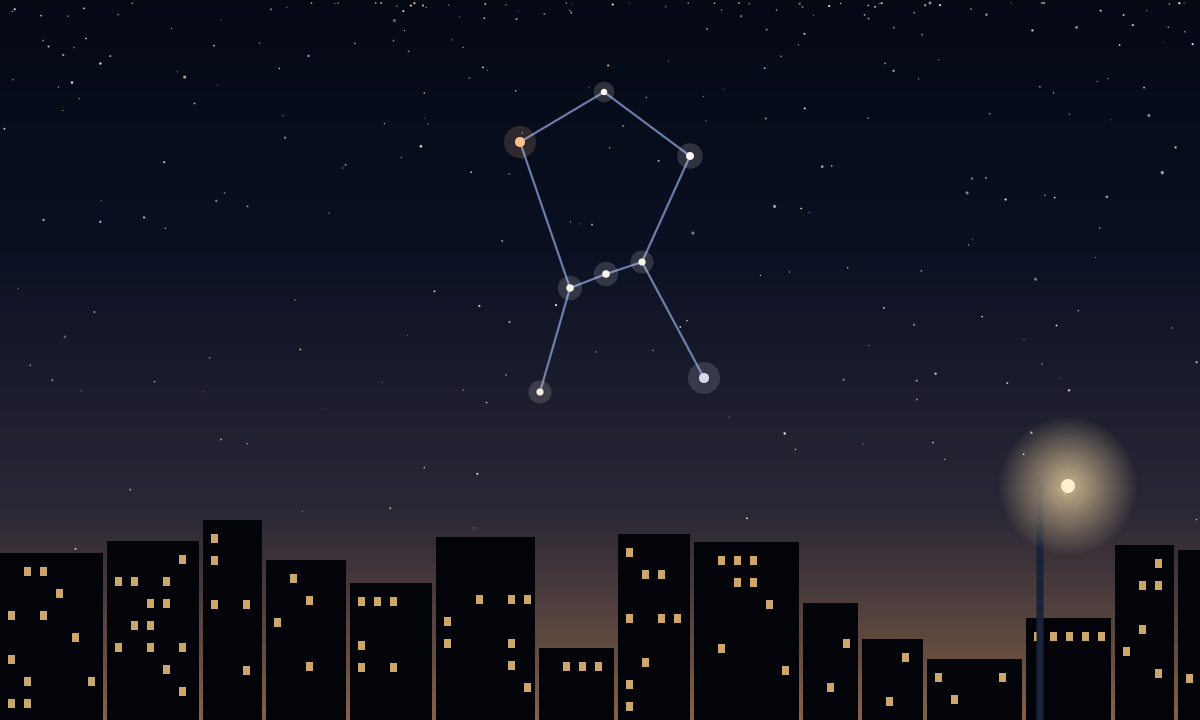
Before outdoor lighting became widespread, almost everyone could see the Milky Way. Today a large share of the world's population lives where it is hidden by artificial light. That does not make astronomy impossible in towns; it changes what you observe and how you plan.
Three kinds of light pollution
- Skyglow: the brightening of the whole sky over towns and cities, caused by light scattered in the atmosphere. It is what turns the night sky orange-grey.
- Glare: direct light from a nearby lamp shining into your eyes, which spoils dark adaptation.
- Light trespass: light spilling where it is not needed, such as a security light flooding a garden.
You cannot fix skyglow on your own, but you can often reduce glare and trespass around your observing spot.
Measure your sky
A simple way to judge your sky is to find the faintest stars you can see in a familiar constellation. The Little Dipper works well for northern observers because its stars cover a wide range of brightness. If you can see only Polaris and the two brighter stars at the end of the bowl, your sky is heavily light-polluted; if you can trace all seven, it is reasonably dark. Repeat the test on different nights and from different spots; the gap between a lamp-lit patio and a shaded corner can be surprising. Observers also use the Bortle scale, which describes skies in nine classes, from excellent dark sites to inner cities.
What still works from town
- The Moon, in all its phases.
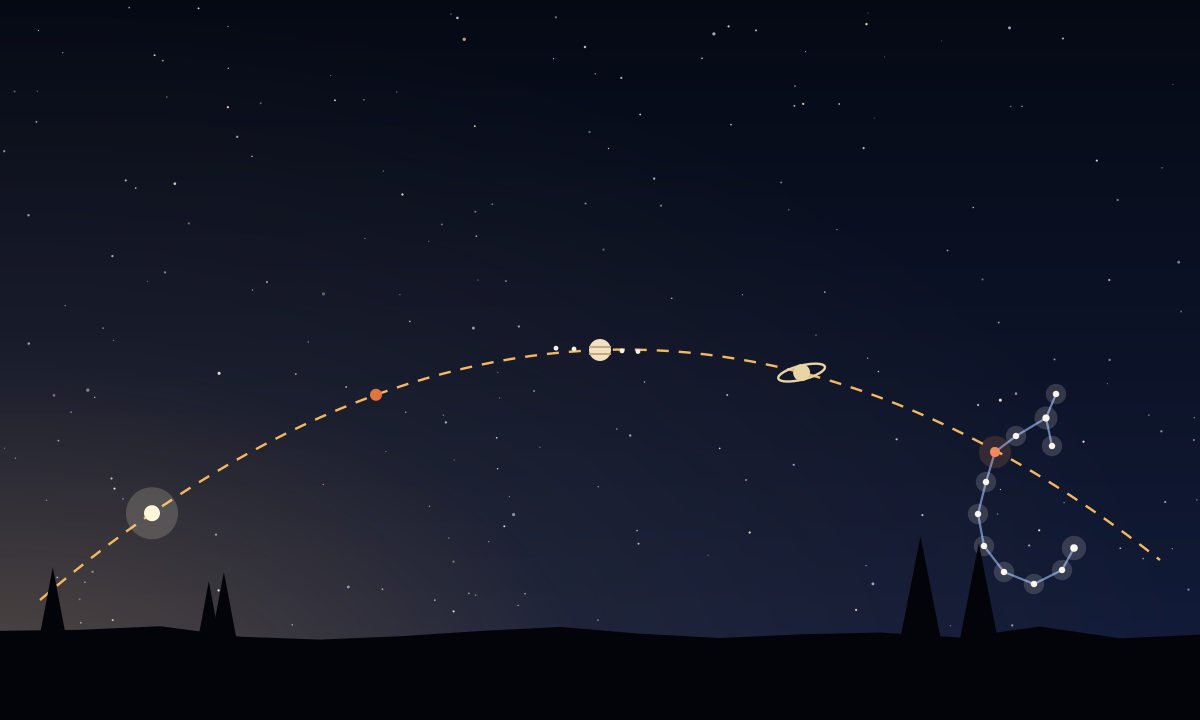
- The bright planets, which shine through skyglow easily.
- Double stars such as Albireo in Cygnus, which a small telescope shows as a gold and blue pair.
- Bright open clusters such as the Pleiades and the Double Cluster in Perseus.
Faint galaxies and diffuse nebulae suffer most, so save them for trips to darker skies.
Make your own spot darker
- Choose a corner where buildings or a hedge block the nearest streetlights.
- Rig a simple shade from a sheet or board to block a light you cannot avoid.
- Ask the people you live with to switch off outdoor lights and draw the curtains while you observe.
- Observe objects high in the sky, where you look through less of the polluted air near the horizon.
- Wait until later in the evening if some local lighting is switched off at night.
About filters
So-called light-pollution filters for telescopes help only with certain targets. Narrowband filters pass the specific colours emitted by glowing gas, so they can improve views of emission and planetary nebulae. They do little for galaxies and star clusters, which shine across the whole spectrum, and no filter can recreate a dark sky.
Worked example: planning a darker-site trip
Suppose you live in a town and have a free evening near new Moon. Look at a light pollution map, many of which are freely available online, and pick a darker place within about an hour's travel. Check that it is public land or a site where visitors are welcome, visit it once in daylight to note the parking spot and any hazards, and check the forecast on the day. Go with a friend if you can, tell someone else your plan, and bring warm clothes, a red torch and a charged phone.
Be part of the solution
At home, outdoor lights that are fully shielded, point downwards, use warmer colours and switch off when not needed reduce glare for you and your neighbours. They also help nocturnal wildlife and save energy.
Key points
- Skyglow, glare and light trespass affect the sky in different ways.
- The Moon, planets, double stars and bright clusters work well from town.
- Plan darker-site trips around new Moon, and put safety first.